The Resistance Paradox: Why Fighting AI Is the Fastest Way to Lose Your Job
Developers dismiss AI code quality. PMs insist they're essential. Both are accelerating exactly what they fear most.
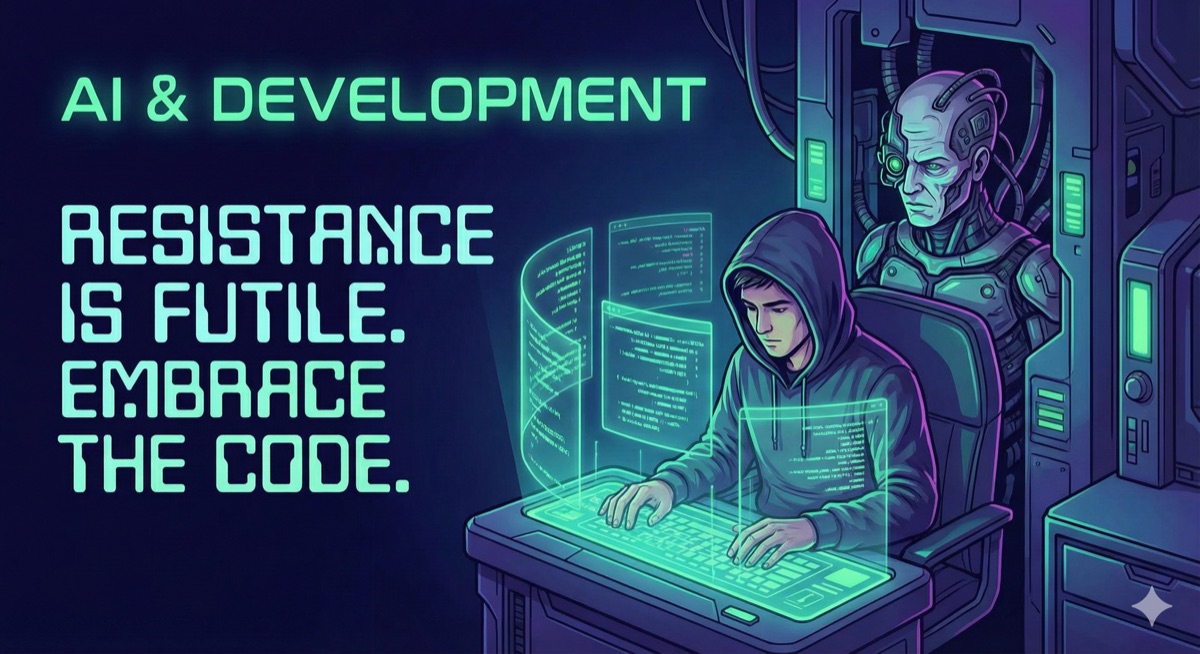
I’ve been watching an interesting phenomenon in tech companies lately.
Developers insist AI-generated code is garbage. “It doesn’t work,” they say. “It creates bugs. It’s not production-ready.”
Product Managers nod approvingly. “See? They still need us to translate requirements. Engineers can’t build without proper specifications.”
Both groups share the same underlying fear: What happens to me if this AI thing actually works?
So they resist. They find flaws. They point out failures. And in doing so, they’re accelerating exactly what they fear most.
The Chain Problem
A company’s speed is determined by its slowest link.
If your organization isn’t aligned end-to-end on AI adoption, it doesn’t matter that one team moves fast. The resistant team becomes the bottleneck. The whole chain slows down.
But here’s what the resisters don’t understand: they’re not stopping AI. They’re just stopping their company from using it.
Their competitors have no such hesitation.
The One-Month Clone
I want you to sit with this fact for a moment:
A top Product Engineer with AI tools can clone your software in one month.
Not a proof of concept. Not a demo. A functional alternative to whatever you’ve spent years building.
That SaaS product your 50-person team maintains? One person, 30 days.
This isn’t hypothetical. It’s happening right now. Every day, solo founders are building in weeks what used to take teams years.
Your moat isn’t your code anymore. Your moat better be something else.
The Two Futures
Here’s the strategic question every CEO is wrestling with:
If one developer with Claude can do the work of ten, do you:
Option A: Fire nine developers. Keep one. Pocket the savings.
Option B: Keep all ten. Make them all 10x faster. Build something your competitors can’t match.
Option A feels smart. Immediate cost reduction. Shareholders love it.
But what happens when your competitor chooses Option B?
They’re not building the same product with fewer people. They’re building a better product with the same people. They’re adding features you can’t match. They’re entering markets you haven’t considered. They’re automating everything while you’re still celebrating your reduced headcount.
Option A companies die. They just don’t know it yet.
The Corporate Immune Response
Large companies have a structural problem with AI adoption.
Their processes were designed to prevent change. Approval workflows. Security reviews. Procurement cycles. Legal assessments. These systems exist to protect the organization from risk.
But in 2025, the biggest risk is standing still.
While the enterprise company spends six months evaluating AI tools, a startup has already:
- Built a competitive product
- Launched to market
- Iterated based on customer feedback
- Automated their entire operation
The startup has no “approved vendor list.” No “AI governance committee.” No “responsible AI framework” that takes nine months to develop.
They just ship.
”But We Have Distribution”
I hear this defense constantly from established companies:
“Sure, startups can build fast. But we have the sales team. We have the customer relationships. We have the brand. Some kid in a garage can’t compete with our distribution.”
This argument made sense five years ago. It doesn’t anymore.
Here’s what AI enables:
Scenario 1: Your competitor buys the disruptor
That “kid in a garage” who cloned your product? Your biggest competitor just acquired them. Now they have your feature set plus their existing distribution. You’re squeezed from both sides.
Scenario 2: The no-brainer migration offer
The startup doesn’t need your distribution. They need your customers. And they can get them with a simple proposition:
“You’re paying €200/month. We charge €20. Same features. We’ll migrate your data automatically. Zero learning curve. Cancel anytime.”
AI doesn’t just build the product. It builds the migration tool. It builds the onboarding flow. It builds the marketing campaign targeting your exact customer profile.
When switching costs approach zero and the alternative costs 10% of what you charge, distribution doesn’t save you.
The Fear Beneath the Resistance
Let’s be honest about what’s really happening.
Developers who dismiss AI code quality aren’t making a technical argument. They’re making an emotional one. If AI can write decent code, what makes them special?
Product Managers who insist on their role as translators aren’t defending best practices. They’re defending their existence. If engineers can understand customers directly, what’s left?
The fear is legitimate. Roles are changing. Some jobs will disappear.
But fighting the change doesn’t prevent it. It just ensures you’re not part of the solution when the change arrives.
What Actually Happens
Here’s how it plays out in practice:
The developers who embrace AI become 10x more productive. They handle the strategic work—architecture, complex debugging, customer-facing technical decisions. They’re more valuable than ever.
The developers who resist become bottlenecks. They’re slower than their AI-enhanced colleagues. They’re more expensive per unit of output. Eventually, they’re redundant.
Same story for PMs. The ones who learn to use AI for research, analysis, and rapid prototyping become strategic assets. The ones who insist on manual spec-writing become unnecessary overhead.
The irony is brutal: Resisting AI to protect your job is the fastest way to lose it.
The Hypercompetitive World
We’re entering an era where execution speed is everything.
Companies that embrace AI will:
- Ship features in days instead of months
- Respond to market changes in hours
- Operate with 10% of the traditional headcount
- Experiment constantly because experiments are cheap
Companies that resist will:
- Watch competitors outpace them
- Lose talent to faster-moving organizations
- Become acquisition targets (at best)
- Die slowly (at worst)
There’s no stable middle ground. No “wait and see” option. The gap between leaders and laggards is widening every month.
What Should You Do?
If you’re a developer:
- Stop complaining about AI code quality. Start learning to direct it effectively.
- Your value is in knowing what to build, not in typing code.
- The developers who thrive will be the ones who embrace AI as a tool, not fight it as a threat.
If you’re a PM:
- Learn to prototype. AI makes this accessible even without coding skills.
- Your value is in customer insight and strategic thinking, not in writing tickets.
- The PMs who thrive will be the ones who can validate ideas directly, not just document them.
If you’re a leader:
- The resistance in your organization isn’t protecting you. It’s killing you.
- Every month you delay AI adoption, your competitors get further ahead.
- The question isn’t whether to embrace AI. It’s whether you’ll do it before your competition eats your lunch.
The Bottom Line
Fear is understandable. Change is uncomfortable. The instinct to resist is human.
But in 2025, resistance isn’t protection. It’s a liability.
The developers and PMs and companies that thrive won’t be the ones who fought the change longest. They’ll be the ones who adapted fastest.
Your competitor isn’t waiting for your “AI readiness assessment” to be complete. They’re already building.
The choice isn’t whether to participate in this transformation. It’s whether to lead it or be left behind.
Chapters 11-16 of “The Broken Telephone” explore how AI transforms product development—from the “Open Bar Problem” of unlimited building capability to practical transition paths for developers and PMs.
John Macias
Author of The Broken Telephone